
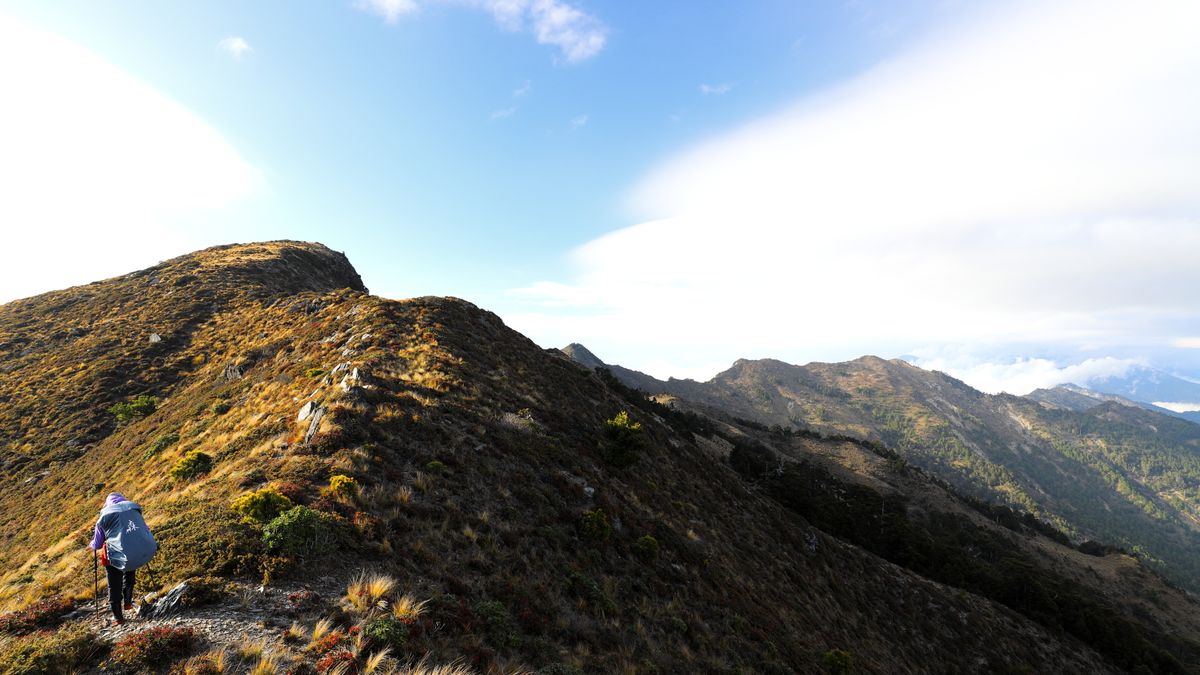
Many hillwalkers treat dusk as the end of the day. On the hill, though, sunset is when your margin for error shrinks to almost nothing. In the UK, darkness falls quickly, especially in the west and north. A cloudless summer evening gives you maybe thirty to forty-five minutes of usable twilight. A damp November afternoon gives you almost none. So don't plan to be back at the car for sunset. Plan to be off the steep ground, off the scramble, and on a clear path well before it.
Start with the exact sunset time for your location and date. Then subtract. You need to be off the summit and any technical terrain at least an hour before sunset. That gives you your turnaround time: the moment you must turn back, regardless of how close the top feels. Work out how long the ascent will take. A useful rule of thumb is one hour for every three kilometres of distance, plus one hour for every three hundred metres of ascent. Add a third for rough ground, deep bog, or a heavy pack. Then add the descent — usually faster, but not by much on steep, loose ground. If the maths doesn't work, choose a smaller hill.
The total is your latest safe start time. If you're starting later than that, change the plan. There is no shame in a shorter day. There is a lot of shame in a rescue call-out you could have avoided.
The hardest part of hill fitness is not the climbing. It's turning around when you're two hundred metres from the top and the light is fading. Ego says "just ten more minutes". Experience says "ten minutes up is twenty down in the dark". Set your turnaround time before you start, tell your walking partner, and stick to it. If you're alone, write it on your map or set an alarm on your phone. When you reach it, you turn. No debate. The hill will still be there next week.
Benightment — being caught out after dark — is one of the most common causes of mountain rescue call-outs in the UK. It is rarely a single mistake. It is a series of small delays: a late start, a longer lunch, a photo stop, a path that isn't where the map said. A firm turnaround time breaks that chain.
A headtorch is not a backup. It is essential kit, all year round. In a UK winter, a clear day can turn to dusk by half past three. In summer, a sudden thunderstorm or a wrong turn can leave you on a featureless plateau at eleven at night. So pack a headtorch with fresh batteries, plus a spare set. Test it before you leave. A phone torch is not enough — it drains your battery, leaves your hands full, and gives a weak, narrow beam that is useless for route-finding.
Also carry a paper map and compass you can use in the dark. If you have never navigated by headtorch, practise on a familiar path one evening. It is a different skill: you lose colour, depth perception, and your sense of distance. What felt like a gentle path in daylight can feel like a ledge at night.
Hill fitness is not only about big lungs and strong legs. It is about moving efficiently for hours, and having enough reserve to navigate safely when you are tired. If you are planning a long day, train on similar terrain. Do some evening walks with a headtorch. Practise pacing: can you hold a conversation on a steep ascent? If not, slow down. Eat and drink before you are hungry or thirsty. A dehydrated, under-fuelled walker makes poor decisions — and poor decisions after dark are how epics start.
Finally, tell someone your plan. Leave a note with your route, your turnaround time, and your expected return. If you are late, they can raise the alarm. That is not dramatic; it is sensible. The best hill days are the ones where the only surprise is the view.

Hi, my name is Anthony kuber. I am artist and fashion designer.
I love to travel and writing blogging.
Your email address will not be published. Required fields are marked *
Software Developer & Writer
Hey, I'm Diva, a developer and writer blending code and creativity. I'm driven by a deep curiosity and a relentless pursuit of excellence. Join me as I craft digital solutions and captivating stories.


