
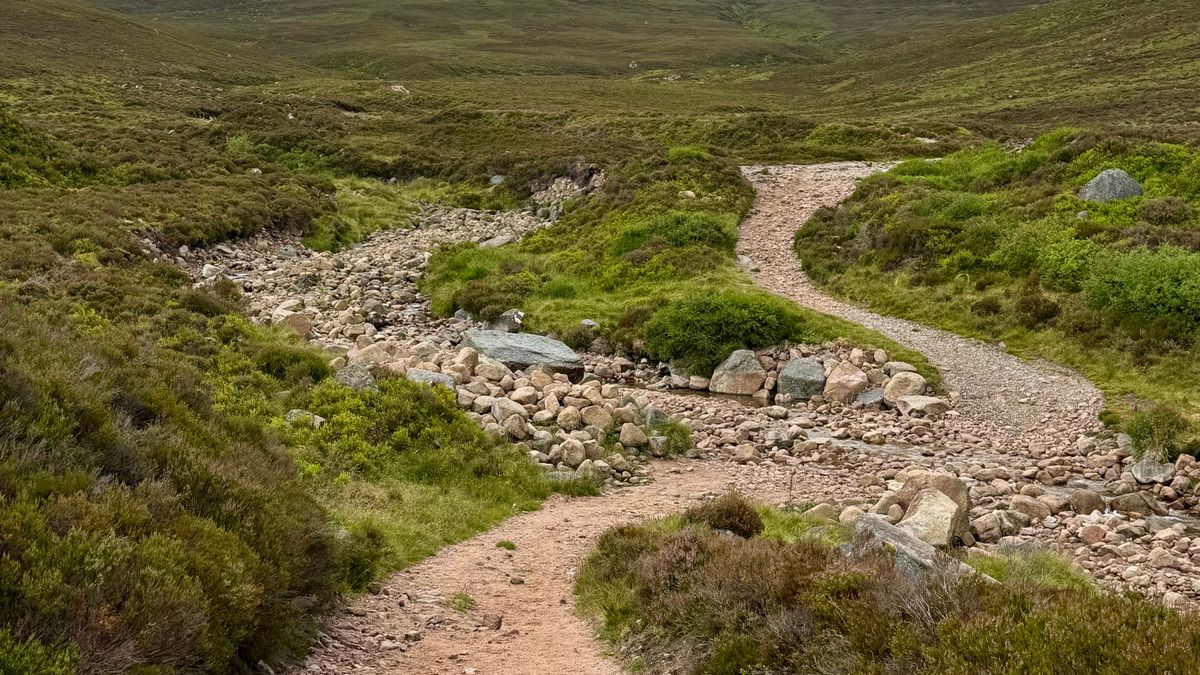
Plenty of people can knock out a flat ten-mile walk without much trouble, then find themselves stopping four times on the pull up to a Lakeland col. The difference is not general fitness but sustained climbing under load. A long drag asks your heart, lungs, calves and hip flexors to keep working at a moderate-to-hard intensity for 20, 40, even 90 minutes without the relief of a downhill. Flat walking never rehearses that, so your body treats it as a novelty on the day you need it most.
The good news is that the fix is specific and fairly simple: practise climbing, practise carrying weight, and respect recovery. Three habits, applied consistently, will change how a long ascent feels.
Once a week, make one session genuinely hard and short. You can use a treadmill at 8–12% gradient or, better, a real hill with a steady, even surface. Warm up for five minutes on the flat or gentle ground, then work.
Use the talk test rather than staring at a watch. On the efforts you should manage short sentences but not a comfortable chat. If you can natter away, go steeper or quicker; if you are gasping, ease off. Keep the recovery genuinely easy — that is what lets you repeat the quality.
Interval work builds the engine; pack walks teach your legs, ankles and shoulders to tolerate the actual demands of a hill day. Once a week, load a rucksack and head for rolling or hilly ground for 60–90 minutes.
Pair the pack walk with a couple of short, sharp sets of step-ups or stair climbing if you cannot get to a hill midweek. A 40 cm step, three sets of 15 per leg, is a decent stand-in for a steep pull.
You do not need a gym membership to protect your knees and keep climbing smoothly. Twice a week, run through a short circuit after a walk or on a rest day:
Stamina is built when you rest, not when you train. Most hill-walkers who plateau are simply carrying too much fatigue.
On the day, the biggest gains come from restraint. Start the first ten minutes noticeably slower than feels right and let your breathing settle before you push the pace. Break every 45–60 minutes, standing rather than sitting, and eat little and often from the first hour rather than waiting until you are hungry or empty.
A workable week might look like this: Tuesday incline intervals, Thursday strength plus a short brisk walk, Saturday a two-hour weighted pack walk on hilly ground, Sunday an easy flat stroll, with the remaining days genuinely restful. Give it eight to twelve weeks before a demanding route and you will notice the change on the first big pull — the stops will come later, then stop altogether.

Hi, my name is Anthony kuber. I am artist and fashion designer.
I love to travel and writing blogging.
Your email address will not be published. Required fields are marked *
Software Developer & Writer
Hey, I'm Diva, a developer and writer blending code and creativity. I'm driven by a deep curiosity and a relentless pursuit of excellence. Join me as I craft digital solutions and captivating stories.


